Thank you so very much.
And good morning to the class of 2026. Parents, families, faculty and yes, everybody in the blue. The graduates. Most of all, I want to start with a confession if I could. When the call came inviting me to this day, my first thought, honestly, was that somebody, somewhere I had made a big mistake. I almost called back to check.
I have spent my career interviewing people who walk into rooms like this one as if they're born to be there the presidents, the CEOs, the founders whose names are on buildings. And here I am. And the truth is, I never in a million years thought I would be the one standing on this stage. And I'm telling you all of this this morning, because the small voice in my head this morning, the one that is whispering, who are you to be up here, is exactly the voice I came here to talk to you about today.
So I want to start with a little story. When I was 17 years old, I used to go home during lunch from high school and call a guy at the New York Times, a columnist named Stuart Elliott. I did this every day for months. I was trying to get an internship with him, and he never picked up the phone.
And then one day he did. I thought God was on the other phone, on the other line at the side of the phone. And that phone call started my career, changed my life forever, and it led to everything that came after it the journalism, the books, the shows, everything. And for a long time, I told myself that the lesson of that phone call was persistence.
And in many ways it was. But it wasn't really the whole story. And that's what I want to talk to you about. I've spent my career trying to understand not just power, but ultimately drive. What makes the most successful people in the world go. I sat across from the CEOs, the presidents, the founders whose names are on buildings.
And I'm here to tell you something today that nobody puts on the magazine covers. They are, almost without exception, deeply insecure. That's where the drive comes from. But before I tell you about them, I want to tell you a little bit about you and me, because in many ways, we're not that different from them. It's just a question about how we use it.
So I want you to think back, if you can, to your first week here, I imagine you walked onto this campus, and somewhere in the first couple of days, that feeling arrived. Some of these people around here are smarter than I am. They read more books. They've got stronger opinions. I know I did this. You scanned the dining hall.
You tried to figure out where to sit. You thought you knew the answer in class. You didn't raise your hand. You stood in front of the mirror before a party and wondered if you look good enough to walk in, and you spent months quietly wondering whether the friend that you wanted to be your friend actually wanted to be your friend.
And right now, I imagine there's folks you sitting in chairs right now feeling a newer version of all of this. You look around and it seems like everyone has figured out what they want to do in their lives. They've got a job, they've got a plan, they've got a program. And you may think in this moment that you have no idea.
And every single person here, I imagine, has felt some version of that. The athlete, the kid who seemed to have it figured all out from day one, I promise you, has felt it.
And the classmate sitting next to you, who looks like they have the next ten years mapped out their faking it to it is the most universal human experience there is, and we spend an enormous amount of our time pretending that it isn't.
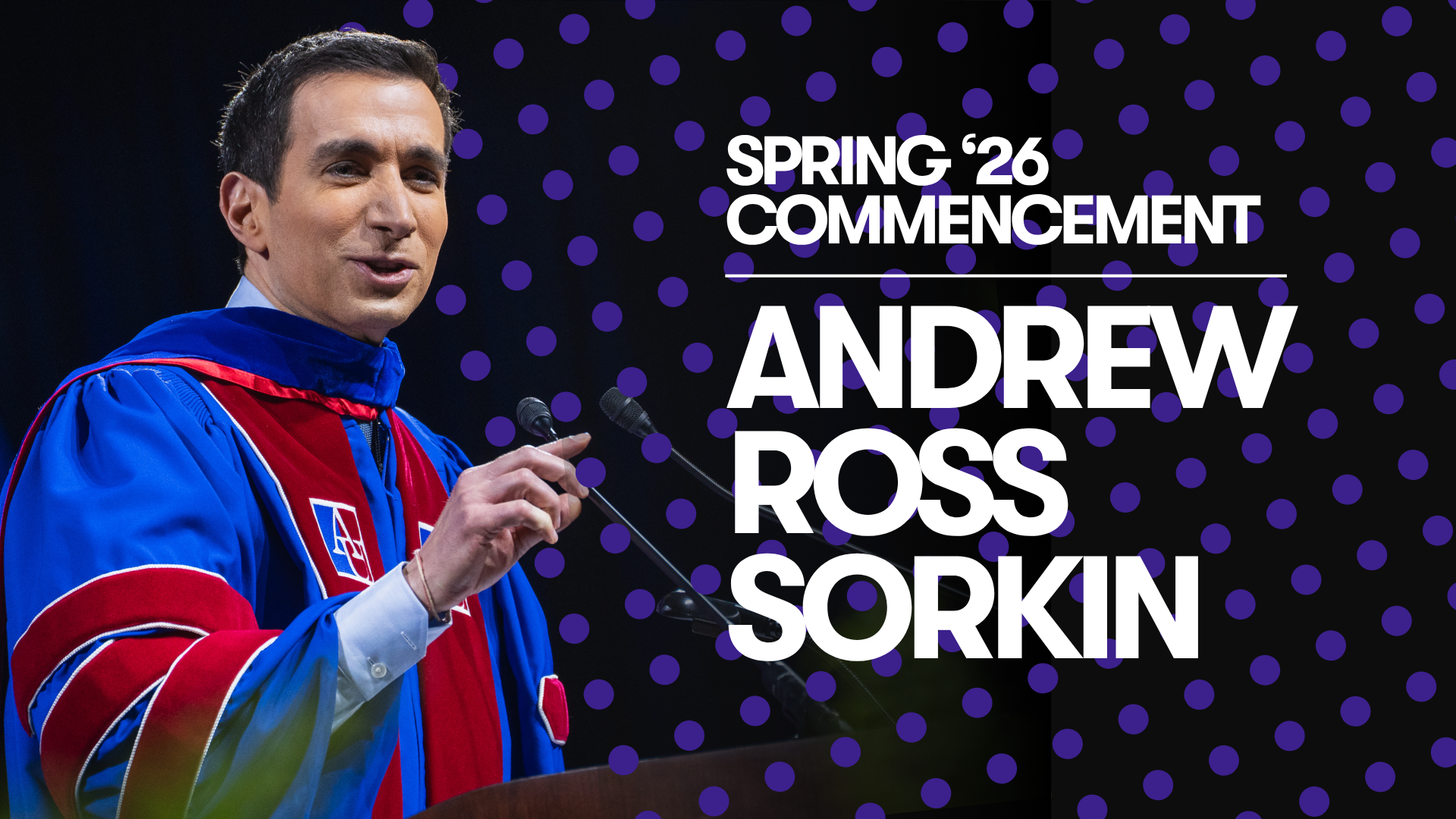
Andrew Ross Sorkin
American journalist, author, and producer
So here's what nobody tells you. That feeling never really goes away. A couple of years ago, I sat on stage with Elon Musk. We had lights, we had cameras. Everyone was leaning into our conversation, and I asked him about something that he had said, that his mind was like a storm, and he paused and he said yes. And he called it a wild storm.
He told me on that stage that most people, if they really knew what it was like to be inside of his head, they would actually not want to be him. Think about that. That is the richest man in the world telling a roomful of strangers that he is not at peace. I've sat with Tom Brady, the greatest quarterback who has ever played the game.
And 20 years on being the best. He still talks about being the 199th pick in the draft. I've interviewed Bill Clinton, a boy whose violent stepfather did terrible things to him as a child who became the most powerful man in the world and still in every room I've ever walked him, I watched him walk into. He still needs everyone in it to love him.
A friend of mine has a line that I've been thinking about for years is this chips on shoulders create chips in pockets. The most successful people I have ever met are underneath the title and all of the security detail. Still trying to prove something to someone. It might be a parent, it might be a teacher. It might be a kid who didn't pick them, a room that did not see them.
And this is the part of the speech where I have to tell you something. I wish that somebody had told me at your age, because you think that the goal is to climb the mountain, to get to the top, to plant the flag and look out at the view? It is not that is not the goal.
The most successful people in the world do not climb a mountain. They climb as a verb, as a way of life. The summit is not the destination. The summit is the moment they start scanning the horizon, looking for the next peak, they reach the top and instead of resting, instead of taking in the view, they look for the next mountain and then the next one. There is no walkaway number and that's what the chip does.
Andrew Ross Sorkin
American journalist, author, and producer
It does not let you arrive. I told you at the beginning of this that we are not that different from them, and I owe you something, honest, before I sit down. I've done my own version of that climb. I've written the books I've made, the shows I've gotten on planes. I've taken calls at midnight and done it again at 5 a.m. in the morning.
And the truth is, it has cost me something. It cost me friendships I should have kept. It cost me time with my kids that I will never get back. It cost me the kind of empty Sunday where nothing is happening and nothing has to. And I tell myself stories about all of this. I rationalize it like so many people do.
I say the kids will understand. I'll catch up with the friend next year. This is the season. The next one will be different. And the truth, the truth. I'm not always brave enough to say out loud, is it? Sometimes it's been worth it and sometimes it has not been worth it. And I do not always know which is which until much later, and neither will you.
The truth is, I'm trying to still prove myself to my mother. I really am, and I'm still that kid in high school dialing the phone at lunch. So here's what I want to leave you with. Chips on shoulders. Do create chips in pockets. My friend is right. The world is going to reward whatever you are quietly trying to prove, and I promise you it will reward it handsomely.
Use that. Let it carry you up the mountain. But success and happiness, they're not the same project. They use the same tools. They sometimes point in the same direction, but they are not the same thing. And the engine that builds one will not on its own build the other. The most successful people I've ever met do not stop climbing and that is a gift.
But it is also a trap. So I'm not going to ask you not to climb. Every person in this room has already proven you know how to climb. I'm going to ask you to use it well. Use it to get up the mountain. Use it to do the work that no one else will do. Use it to stay in the room with people that you think are smarter than you use it to.
Call the Stuart Elliot in your life every day at lunch until he picks up. But somewhere along the way, at the top of one of those mountains, when the air is thin and the view is wide and you have a moment to yourself, put down the binoculars. Stop scanning the horizon. Sit down on the summit just for a little while, and take in the view, because this morning you are on top of one of those mountains, so enjoy it.
Congratulations to the class of 2026.
Thank you.
.png)